

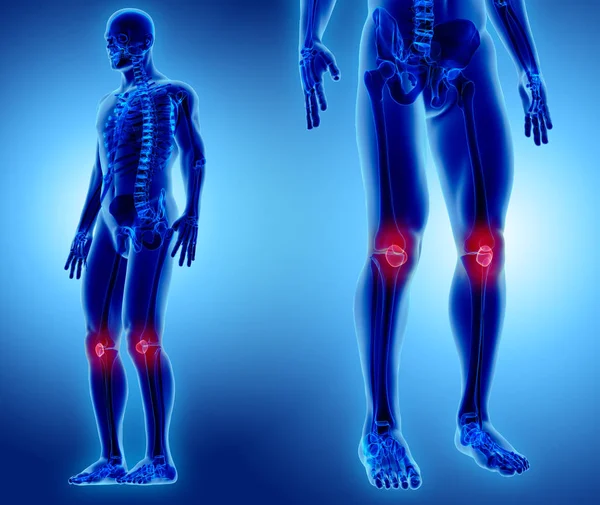
For many years, students and professionals in the field of anatomy believed that every major part of the human body had already been documented. However, recent research has revealed the presence of an additional ligament in the knee, expanding the known count of human ligaments beyond earlier estimates. This finding challenges long-standing assumptions about knee anatomy and may reshape common approaches to treating knee injuries.
Background of the Discovery
The existence of this structure was originally proposed more than a century ago by a French researcher who observed indications of an additional ligament on the outer front side of the knee. Only recently has a modern surgical team conducted detailed examinations confirming that this ligament truly exists. Their work, published in a respected anatomical journal, shows that this structure is present in the majority of people, although a small percentage—about 3%—may not have it.
This newly identified ligament has been named the anterolateral ligament (ALL). It connects the thigh bone to the outer front portion of the shin bone. Although small, its presence appears to play an important role in the stability and controlled movement of the knee joint.
Understanding the Function of the ALL
The knee relies on several ligaments and tendons to maintain stability during bending, straightening, and rotating actions. Among them, the anterior cruciate ligament (ACL) is one of the most commonly injured. The ACL helps control rotational movements and is frequently damaged in sports involving sudden turns, jumps, or directional changes—such as football, basketball, and skiing.
Researchers now believe that the ALL may support the ACL during rotational movement, adding another layer of stability. When the knee rotates or pivots, the ALL may help manage the rotation and reduce strain on the ACL. This new understanding offers a fresh perspective on how the knee functions during common athletic motions.
Impact on ACL Injury Treatment
One of the most significant implications of this discovery relates to individuals who undergo surgery for ACL tears. Despite advancements in surgical techniques, some patients experience ongoing instability even after procedures meant to repair or reconstruct the ACL. This has puzzled orthopaedic specialists for years.
With the identification of the ALL, a possible explanation is emerging. If both the ACL and the ALL are injured at the same time, repairing only the ACL may not be enough to restore full stability. Without addressing damage to the newly identified ligament, the knee may continue to feel unstable, leading to unsuccessful recovery outcomes.
This deeper understanding of knee anatomy could influence future surgical strategies. By examining the condition of the ALL in patients with ACL injuries, medical professionals may be able to provide stronger, longer-lasting treatment solutions.
Conclusion
Always consult with your doctor or a healthcare professional before making any major changes to your diet, lifestyle, or medical routine. They can offer personalized advice based on your current health condition and medical history. Note – If you have any health-related concerns, please call us at +91-9058577992 to receive free consultation from our experienced doctors. Thank you
